Changelog
3.7
Fusion 3.7 — Public Preview: Fusion in Microsoft Fabric
Microsoft Fabric Integration Showcase
Below are screenshots showcasing the Fusion integration with Microsoft Fabric, demonstrating the powerful analytics and visualization capabilities now available.
Fusion Dashboard in Microsoft Fabric
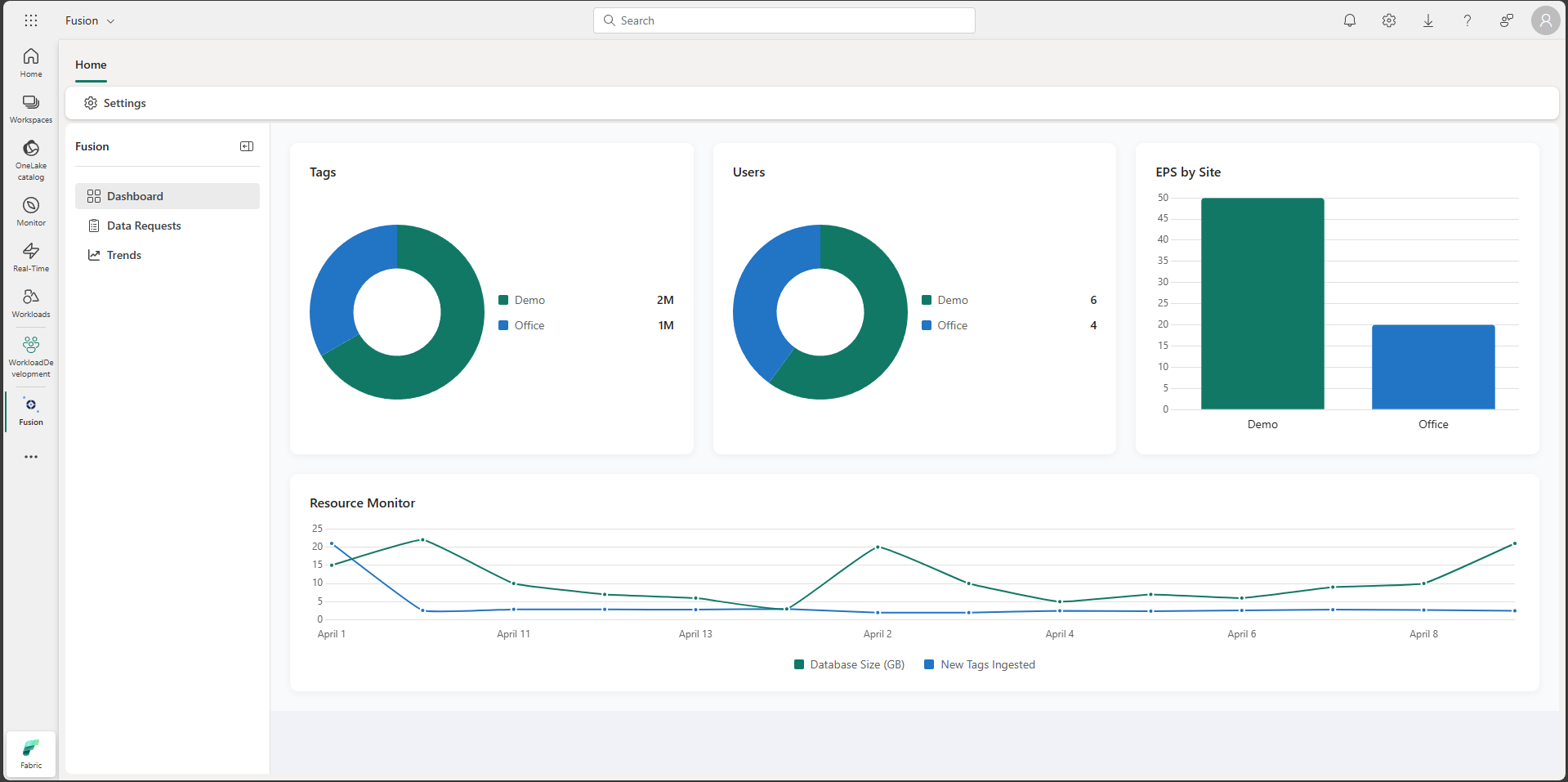 Real-time operational dashboard powered by Fusion data streams in Microsoft Fabric
Data Requests Interface
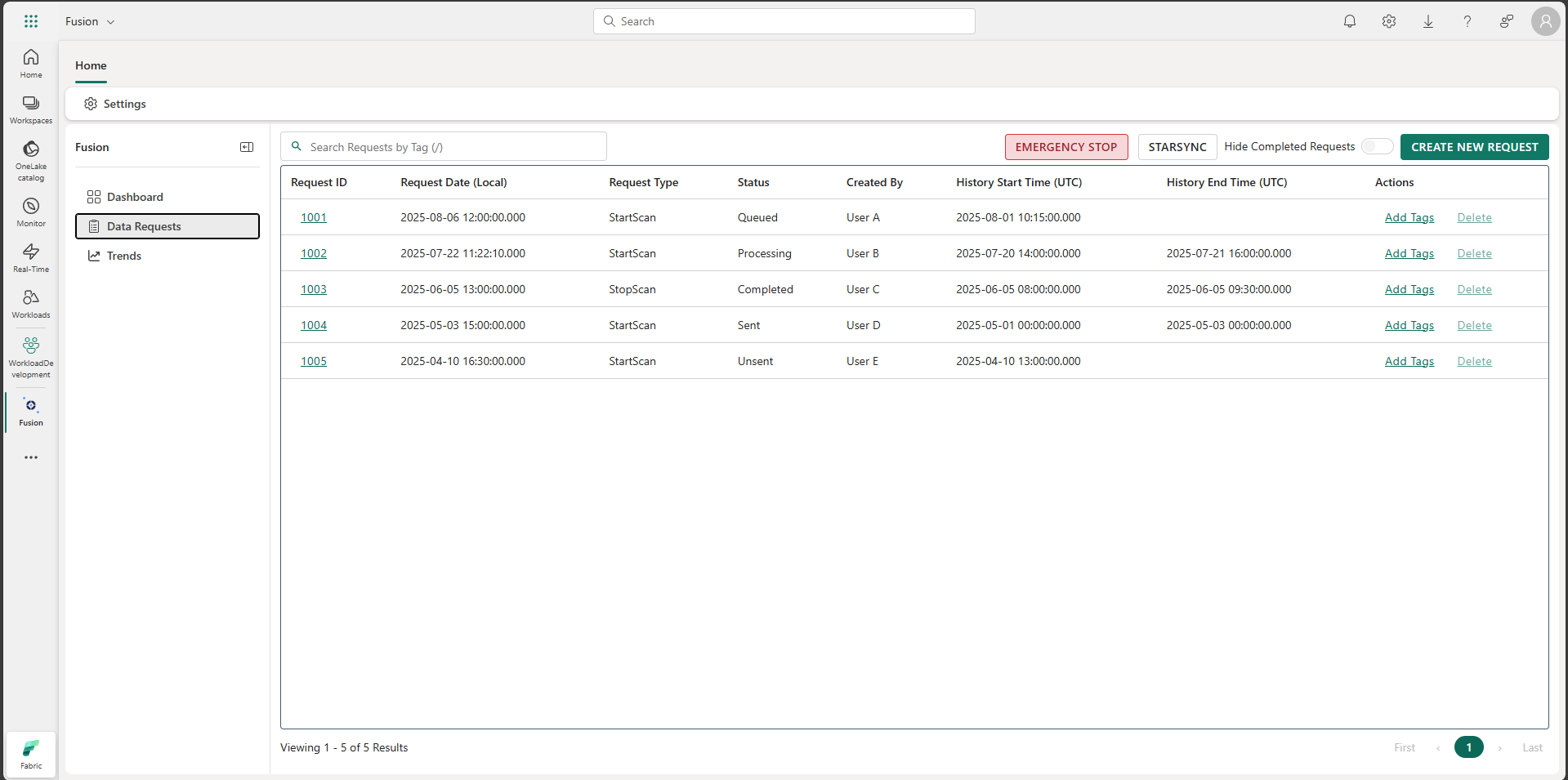 Streamlined data request management interface within the Fabric ecosystem
Trender Visualization
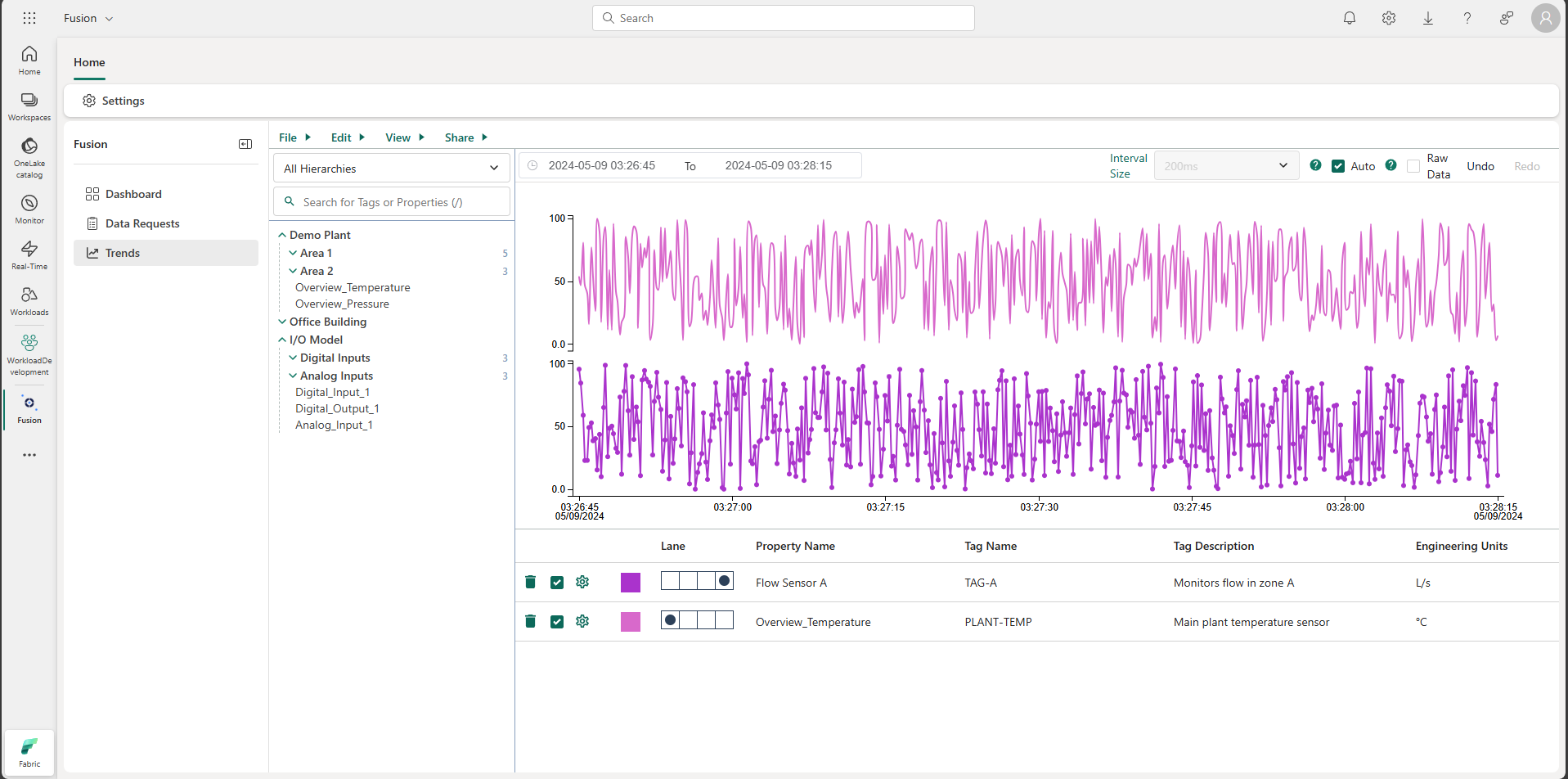 Advanced trending and analytics visualization leveraging Fabric's powerful data processing capabilities
| Feature/Enhancement | Description |
|---|---|
| Microsoft Fabric Integration | Public Preview of Fusion in Microsoft Fabric, bringing operational data, models, and events into Microsoft's unified analytics platform |
| Event Frame Relay in Workload Configuration | Enables streaming of Fusion event frames into Fabric for near real-time downstream processing |
| Connected Events (Fabric Workload) | Fusion events are now wired to Fabric destinations, enabling pipeline, alert, and visualization triggers without custom code |
| Eventhouse Integration | Fusion event streams can be captured in Fabric Eventhouse for high-volume, low-latency exploration of operational data |
| Connected Models (Fabric Workload) | Fusion models are exposed for Fabric consumption, enabling analysts to join operational context with Lakehouse data and build Power BI reports |
| Security Hardening for Fabric Workload | Improved access controls and secret handling for the Fusion Workload within Fabric workspaces, aligning with Fabric's governance patterns |
Key Benefits:
- Real-time intelligence with event-driven scenarios
- AI assistance and agents through Fabric Copilot
- Enterprise-grade governance with Microsoft Purview integration
- Unified analytics platform combining data movement, processing, warehousing, real-time analytics, and BI
- No-code/low-code acceleration for building pipelines, dashboards, and data apps
Note: Fusion in Fabric currently only supports moving data to an Event House and not ADX and an Event House.
Note: Multiple Fusion workloads can be installed, but each instance is tied to a single Fabric KQL database.
Features/Improvements
SFFH-1921 — Event frame requests not sent: Fixed an issue where some event frame requests failed to dispatch, ensuring continuous event delivery to Fusion.
SFFH-1922 — EventSources table empty after ModelReader run: Addressed a condition where the EventSources table could appear empty after running Model Reader which causes Event Frames to stop being delivered to Fusion.
SFFH-1750 — Model Reader soft-link handling: The model reader used to skip child nodes of already-seen IDs to avoid circular paths, which caused issues when a soft link was encountered first, leaving both linked instances without child entries. This was fixed by making it follow only strong or composition references between parent and child nodes.
SFFH-1831 — Updated terraform to remove Azure Front Door (classic): Updated Terraform configuration to stop creating Front Door (classic) resources as Front Door (classic) is deprecated and is unnecessary.
Azure Front Door (classic) was removed from the terraform as it is unnecessary and costly for our customers. For customers who want this functionality, we recommend using custom domains which can be set up directly on the AppService.